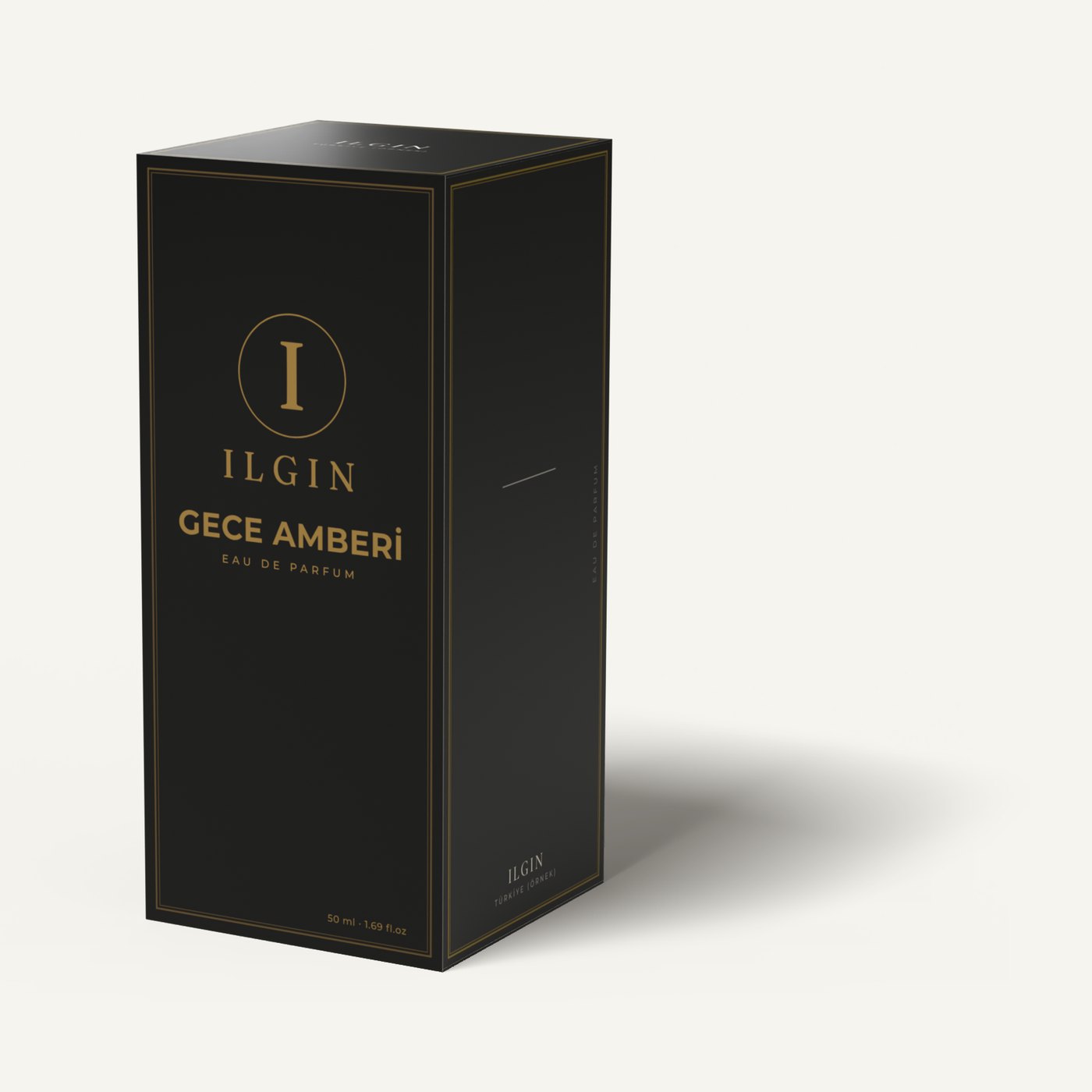
ILGIN · Gece AmberiPerfume box
Input: an example brief + an example ILGIN logo. Engine output, rendered under studio lighting.
Alongside required cookies, we use analytics and ad-measurement cookies with your consent. You can change your choice at any time.
A perfume box carries the brand on the shelf and at the gift moment, but a good box starts with the right measurements. This guide walks through the decisions that take a perfume box from bottle size to a print-ready dieline: box type, panel copy, finishes and the hand-off to your printer. In the Grapxo studio you write those decisions into a brief; the vector engine produces a layered, editable surface on the dieline.
Input: the real Buvlass logo + an example brief (NOIR · Eau de Parfum 50 ml · straight tuck-end 55 × 55 × 125 mm). Engine output, first pass. The engine picked the recommended design; our design team picked the two alternates by eye. The 3D view folds the engine's own faces in CSS — it is not a lit render. *1:1 assumes a 96 dpi screen.
Five different brands and layouts from the engine; all from the same production line.
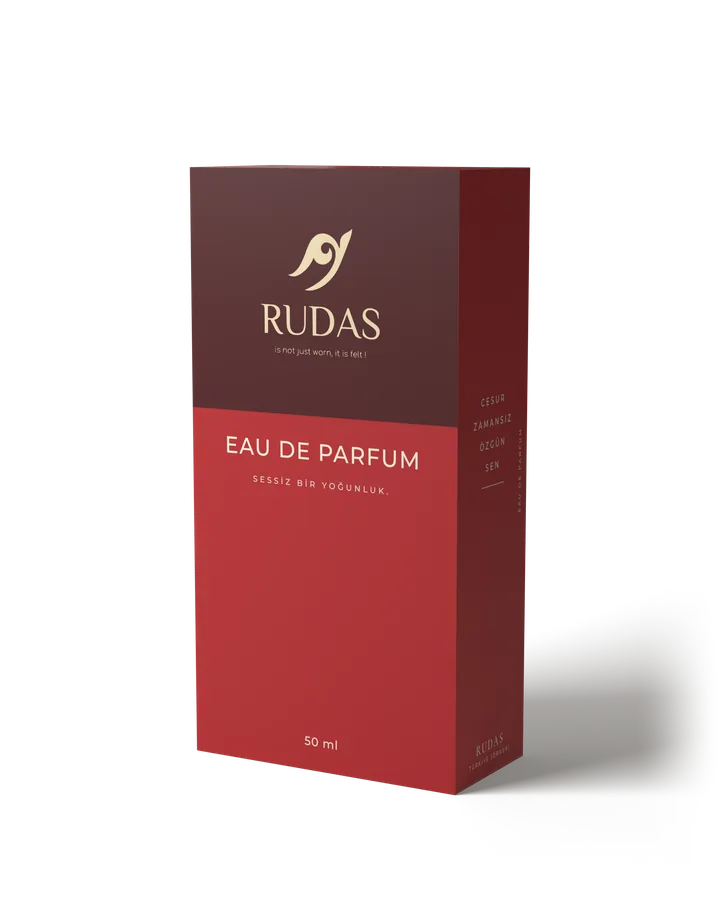
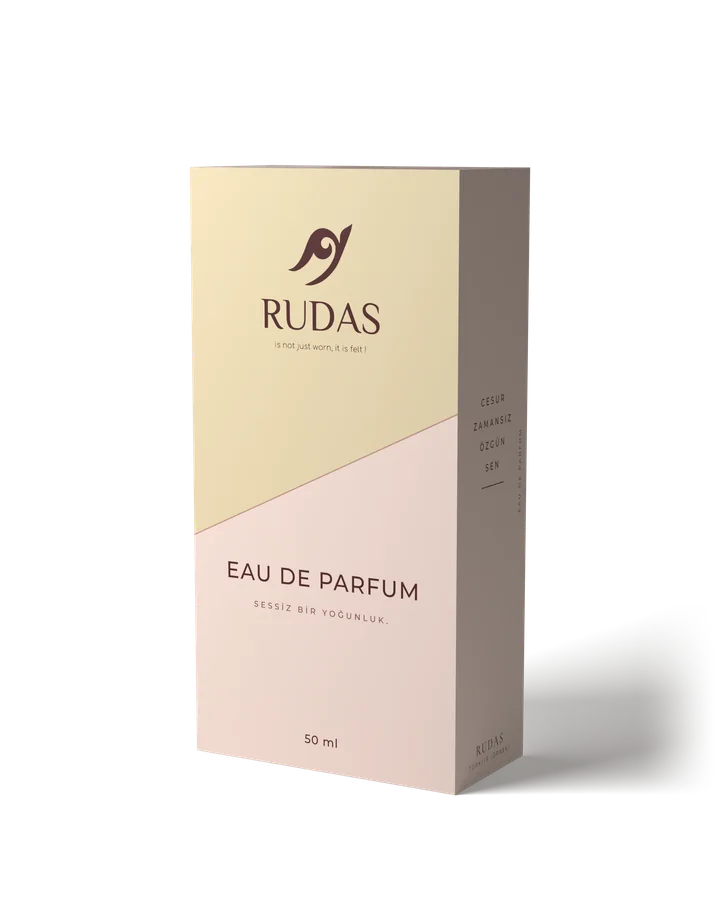
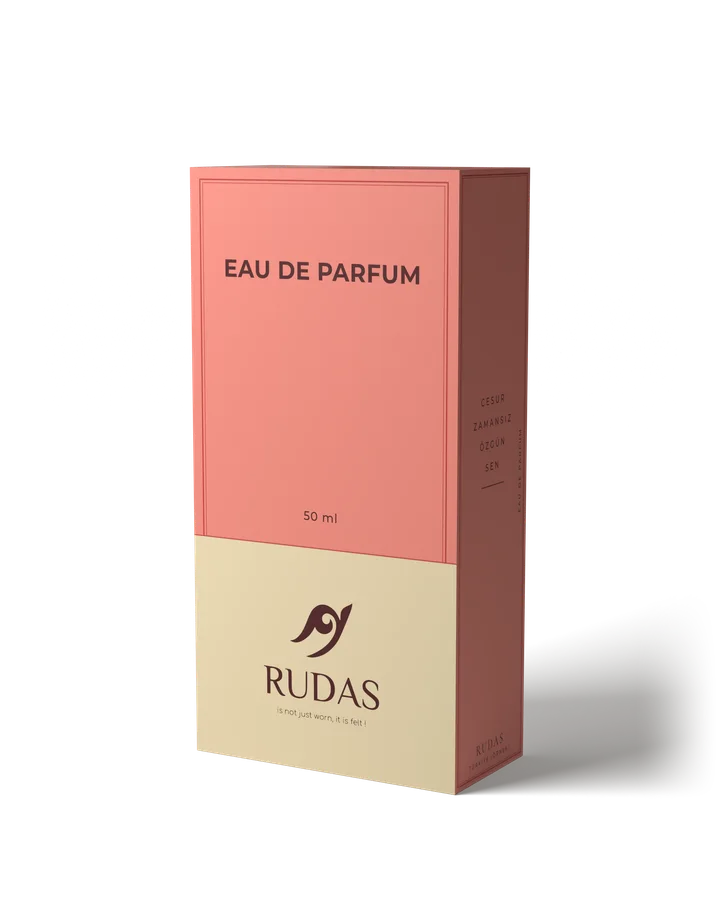
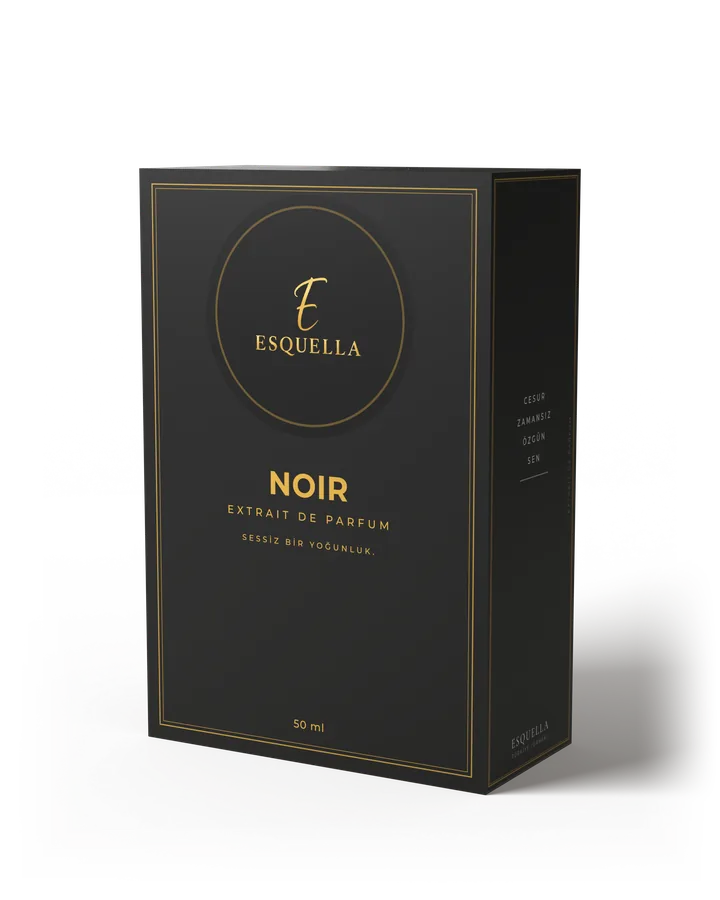
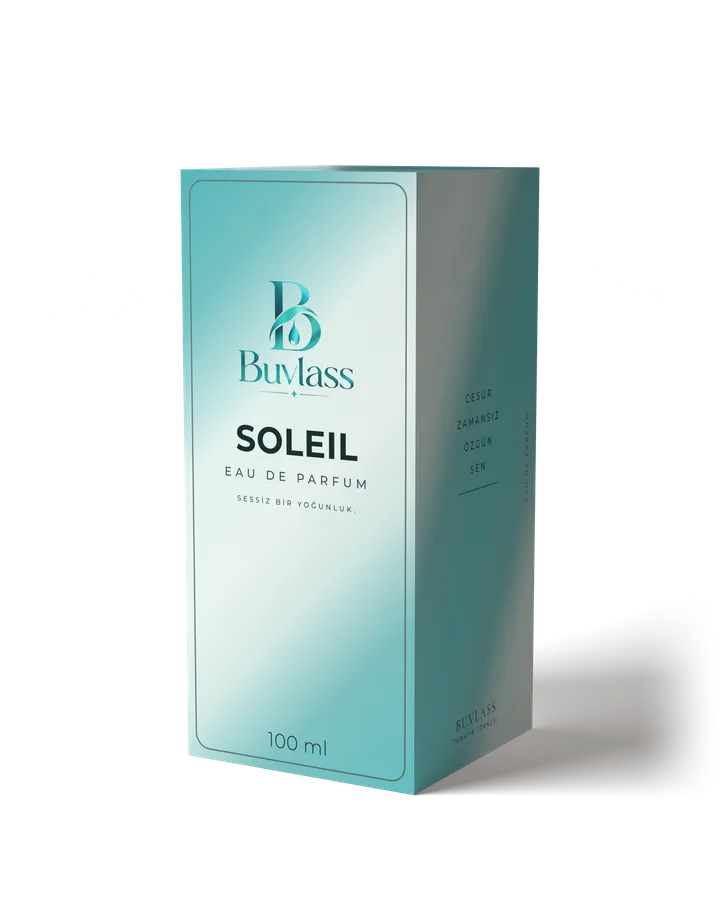
Input: RUDAS (the real file), ESQUELLA and Buvlass are real logos. All five are an example brief + engine output, a real render.
Clear panels for the bottle silhouette, brand name and variant information. A layout that leaves room for material and print quality instead of heavy effects.
Callout labels are for illustration only. The real Buvlass logo + an example brief (NOIR · Eau de Parfum 50 ml · straight tuck-end 55 × 55 × 125 mm). Engine output, first pass.
A box and a bottle label, two different brands.
Input: an example brief + an example ILGIN logo. Engine output, rendered under studio lighting.
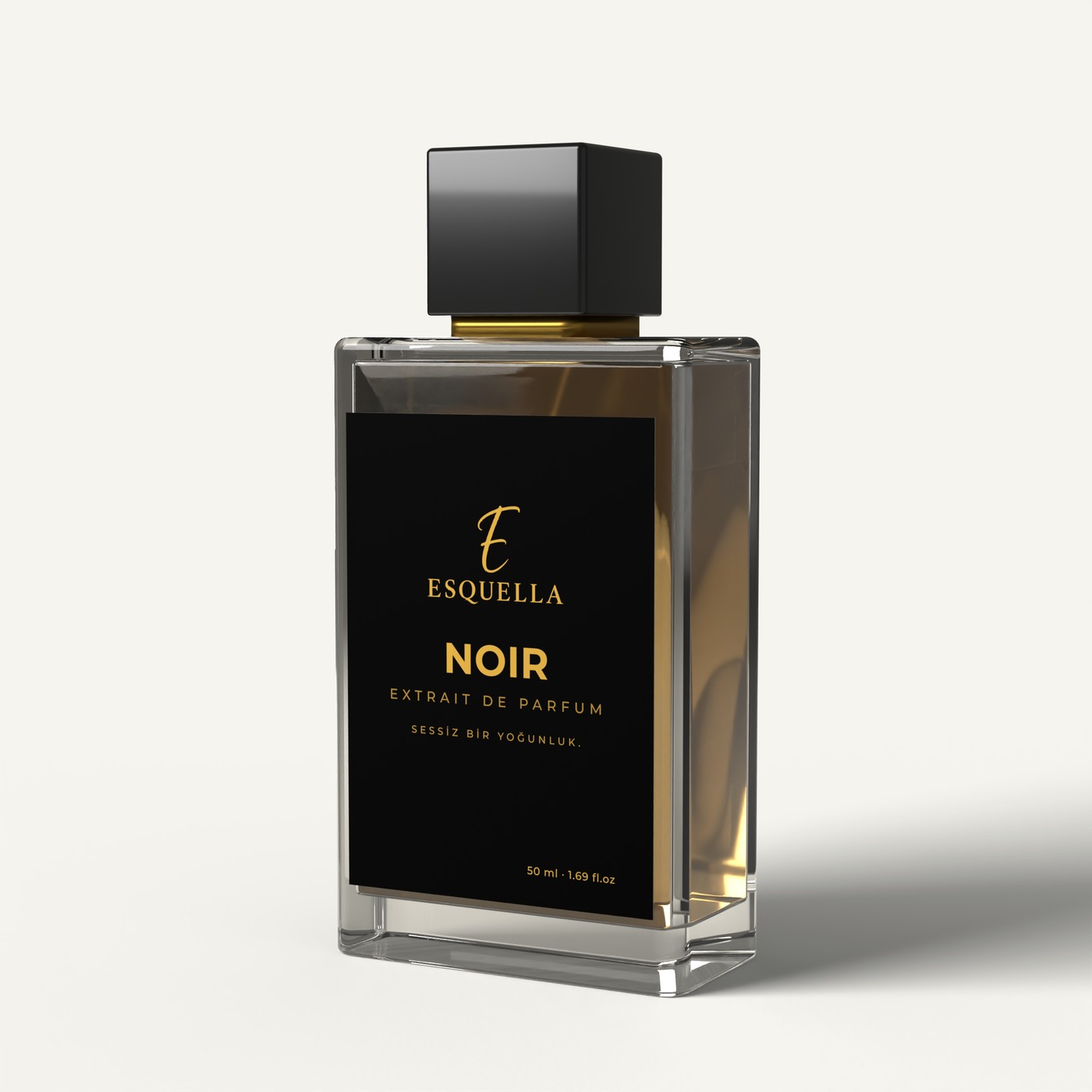
Input: the real ESQUELLA logo + an example brief. Engine output, rendered under studio lighting.
Perfume box design means planning the structure (dieline) and the surface graphics of the box that protects the bottle and carries the brand on shelf, together. It starts with the bottle’s widest dimensions including the cap; the millilitre value alone does not give you a size. Box type, material, insert, panel copy and finishes follow.
Graphics live on the flattened box. A brand name that lands on a fold gets split in two; a pattern that runs onto the glue flap disappears once the box is closed. That is why the logo, product name and concentration are placed only after the panel boundaries are known. Reading a tuck-end dieline and Dieline explain how cut, fold and glue lines are read.
A sleeve is a thin, light outer layer and can be enough for shelf presentation. An outer box protects the bottle better in transit and at the gift moment. The choice depends on sales channel and shipping risk. See Perfume sleeve vs outer box for the full comparison.
Measure the bottle, not the volume: with the cap on, take the widest points of width, depth and height. Add clearance to this inner size for board thickness and any insert; how much depends on your printer and insert type. Two 50 ml bottles can need very different box sizes, so always start from the bottle itself.
Use calipers and measure at the widest points including the cap. Tell your printer clearly whether the figures you send are inner or outer dimensions; board thickness changes the outer size.
This is a fill-in template. There is no list of "standard perfume box sizes"; the bottle sets the size.
| Field | Value | Note |
|---|---|---|
| Bottle width (W) | ___ mm | Widest point including cap |
| Bottle depth (D) | ___ mm | Widest section on oval or flat bottles |
| Bottle height (H) | ___ mm | With cap on |
| Cap type | ___ | Screw, push-on, pump |
| Insert | ___ | Board, EVA, foam or none |
| Material and thickness | ___ | Confirm with printer |
| Box inner size | ___ × ___ × ___ mm | Bottle + clearance |
| Box outer size | ___ × ___ × ___ mm | Calculated or confirmed by printer |
The boxes on this page are real engine outputs, made from their own brief sizes: straight tuck-end 55 × 55 × 125 mm (Buvlass NOIR, Eau de Parfum 50 ml), 70 × 35 × 140 mm (RUDAS, Eau de Parfum 50 ml) and 100 × 50 × 150 mm (ESQUELLA NOIR, Extrait de Parfum 50 ml). All three hold 50 ml bottles, yet their sizes differ widely. These values are examples, not standards.
A board insert is the common, economical way to hold the bottle in place and is often cut from the same board as the box. EVA or foam cavities hold the bottle more tightly in rigid boxes and gift sets. Every insert changes the inner size, so the box size is not final until the insert is decided. Grapxo does not draw inserts or foam cavities; the insert is cut with your printer.
For an economical, light shelf solution, a folding carton (tuck-end) box is enough. For gifting and a premium feel, brands choose a rigid box, a magnetic lid or a drawer style. The choice depends on budget, shipping risk, order quantity and brand positioning. A detailed comparison is on the Perfume box types page.
| Type | Perception | Cost direction | Transit strength | Note |
|---|---|---|---|---|
| Folding carton (tuck-end) | Shelf, everyday | Low | Low–medium | Protected by a shipper in transit |
| Rigid box | Gift, premium | High | Medium–high | Wrapped greyboard |
| Magnetic lid box | Premium, collection | High | Medium–high | Opening experience stands out |
| Drawer (sleeve + tray) | Gift, set | Medium–high | Medium | Two-part structure |
Cost and strength directions are relative; real prices and performance depend on quantity, material and finishes, and come from your printer. For rigid boxes Grapxo draws the base and lid nets; your printer completes the wrap-paper layout and any magnet slots.
The front panel carries the brand name, product name, concentration (for example Eau de Parfum) and volume. Side and back panels hold the ingredient list, warnings, manufacturer or responsible person details, batch number, barcode and recycling marks. Mandatory items depend on cosmetics regulation in your market, so always check the current text.
Reserving these zones at the start is far easier than squeezing copy in during the last round.
In the EU, cosmetics labelling is set by Regulation (EC) No 1223/2009; in Turkey by the Cosmetics Regulation (Kozmetik Yönetmeliği). These texts define which items must appear on the outer box versus the container and the exceptions for small packs. This section is for information only and is not legal advice; check the current text. Grapxo does not write mandatory copy for you; it helps you keep readable space for it.
The most common finishes on perfume boxes are hot foil, embossing, spot UV and soft-touch lamination. Each finish should be marked on the dieline as a separate layer and separate colour. Every finish adds tooling and cost, so the right choice is made with a printer’s physical sample rather than on screen.
See Hot foil, emboss, spot UV for the differences, Soft-touch vs matte lamination for surface choice and Cosmetic box board weight for board selection.
In Grapxo you write the bottle size, box type, brand name, variant and volume into the brief and, if you like, upload your logo. The vector engine produces a surface with panels laid out on the dieline. The output is a layered vector file, not an image; colour, material and cutting are approved with your printer.
Before handing off, go through Seven SVG dieline mistakes. If you also need a sleeve and a bottle label from the same brief, Packaging sleeve, box and label explains the flow.
Canva is strong for quick visuals and presentations, Pacdora for dieline templates and 3D mockups. Grapxo focuses on producing a print-ready vector surface from a brief for a perfume box whose size is known. Whichever tool you choose, the final file is approved with a printer’s proof. It is more accurate to see them as different steps of a workflow.
| Criterion | Grapxo | Canva | Pacdora |
|---|---|---|---|
| Core approach | Chat / text brief + optional logo; vector engine produces dieline and surface, not an image-generation model [G1] | Drag-and-drop editor and templates; Magic Studio generated elements [C1][C6] | Dieline templates and generator, 3D mockups, AI tools; AI design onto dielines (AI Creation) since April 2026 [P1][P2][P5][P7][P8] |
| Dieline from your dimensions | From brief dimensions; 25 box and pouch structures (for example tuck-end, reverse tuck, lock-bottom, pillow, hinged-lid, drawer, tray, mailer, pizza box, doypack) and 9 label options; rigid box base + lid nets only. No material selection; the engine writes a material recommendation | No parametric dieline generator seen on reviewed pages [C1][C3] | Yes: size, material, thickness [P2] |
| Ready-made templates | Generated from brief instead of templates | Packaging and label templates [C1][C2] | 3000+ dieline templates [P3] |
| Print file | ZIP: cutter SVG + DXF, dieline SVG + PDF, combined and artwork SVG, print PDF, separate effects PDF (foil, spot UV, emboss as separate spot layers) [G2] | "PDF Print" with bleed and crop marks [C7]; CMYK PDF and SVG download on paid plans [C4][C5] | Per Pacdora: dieline PDF free, .ai and DXF with subscription; product images up to 8K [P4][P5] |
| 3D preview / mockup | In-browser 3D preview (folded box, pouch, flacon, jar); no render or video export | Packaging mockup generator [C3] | 3D mockup and render [P1] |
| Print ordering | None; the printer is the user’s choice | Canva Print for products such as mailer boxes and labels [C2][C6] | Routes to print services [P4] |
| Interface language | Turkish interface + English; TR and EN structure names in the studio [G1] | Turkish site available (canva.com/tr_tr) [C8] | No Turkish interface found (pacdora.com/tr returned 404, 11.10.2026) |
| Pricing model | Monthly plan + design rights; 1 design right on sign-up for the first design [G5] | Free plan + paid plans (official page) | Free tier + subscription; AI tools use credits [P6] |
| Best suited for | A print-ready vector surface for a box or label of known size | Quick visuals, social, presentations, simple labels | Finding dieline templates, 3D mockups and presentations |
For a broader comparison see Grapxo vs Canva.
If your bottle size is ready, open a project in the studio and write the size and box type into the brief; the engine produces the first surface on the dieline. Here is what a print-ready dieline file contains. Comparing tools? See Grapxo vs Pacdora. Questions: info@grapxo.com
No. The bottle’s widest dimensions including the cap, plus the insert, set the box size; bottles of the same volume can need different boxes.
Folding cartons commonly use coated board; the weight is chosen for strength and feel. Rigid boxes use wrapped greyboard. Grapxo does not offer material selection; it writes a recommendation (e.g. 300–400 g/m² GC1/GC2 board), and material and thickness are settled with your printer.
Usually on the back or bottom panel, on a flat area away from cut and fold lines. Its white background and quiet zone are planned on the dieline.
No. Grapxo is a vector engine; it produces a layered, editable design surface on the dieline.
A sleeve can work on shelf; for shipping and gifting most brands use an outer box. See the perfume sleeve vs outer box page.
Send the layered vector file with cut and fold on separate layers, and do not go to press before approving the printer’s proof.
Write your brief and let Grapxo produce a print-ready vector surface.